
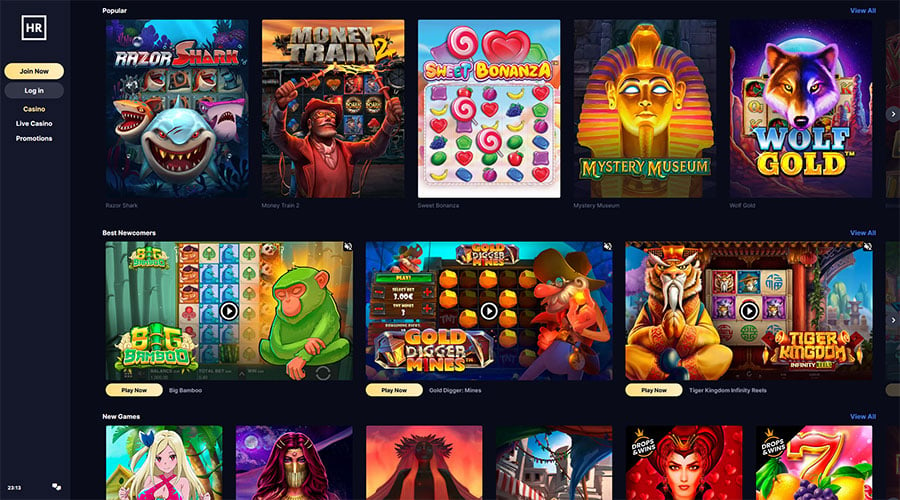
We expect our digital lives to follow us from screen to screen without a hitch. I sought to see if Reelson Casino really delivers on that promise. So, I put their cross-device sync through its paces, monitoring whether a gaming session could hold together across a phone, a tablet, and a desktop PC. My goal was simple: to see how well it works in practice, not just in theory.
Switching from Desktop to Mobile: A Smooth Handoff?
Starting a slots session on desktop and moving to my phone worked well. The game lobby always showed my recent plays. When I started the same slot on mobile, it usually opened to the main screen, not the middle of a spin. That’s a prudent and logical default.
Live casino games were trickier. Logging in was consistent, but the live dealer table itself didn’t automatically reopen. My seat and bet history were preserved, though, so I could rejoin the same table quickly. My balance refreshed instantly on every device I had open.
I noticed game-specific settings didn’t travel. If I changed autoplay spins or turned off sound on a slot game on my desktop, those preferences didn’t carry over to my phone. This tells me synchronization concentrates on transactional data and progress, not local device configurations.
- Balance updates were immediate after any transaction—deposits, bets, or withdrawals.
- Progress in complex slots with bonus rounds is saved, though active sessions restart from the lobby to keep things fair.
- Live dealer seats, current bet history, and text chat logs are maintained for easy re-entry.
- Active bonus counters, wagering requirements, and free spin counts refresh in real-time everywhere.
- My transaction history and account messages were always uniform, with no delay on new entries.
Instant Data Updates: Live Bets and Account Balance Changes
This is the most demanding test for any synchronization system. I created a deliberate scenario: I submitted a bet on a live roulette wheel using my tablet, while leaving the identical game open but idle on my phone. The funds on the inactive device refreshed within two or three seconds.
The system smartly blocks contradictory actions. Trying to place a bet from two devices at once causes an error on the second attempt. Real-time win alerts displayed reliably on the active session but did not overload all my other logged-in sessions.
I investigated further by tracking a wagering requirement indicator during a active blackjack round. As I placed and settled bets on my desktop, the tracker widget on my tablet refreshed the leftover amount with a delay of less than two seconds. That shows excellent server-side coordination.
- Balance updates propagate to all active sessions in two to three seconds, which is a solid benchmark.
- The platform blocks parallel wager submission to safeguard game integrity and monetary precision.
- In-play video streams are independent per device; only the key betting data and table status sync from the server.
- Activating a bonus offer is reflected instantly across devices, stopping any effort to redeem it again.
- Competition rankings and my progress refreshed in almost real-time, which keeps the event fair.
Limitations and Technical Constraints Observed
No system is flawless, and I encountered some clear boundaries. The main constraint is tied to game design: most slot games cannot and must not resume a mid-spin animation on a separate device. The threat to random number generator integrity and network latency is unacceptable. Resetting to the lobby is the proper technical behavior.
I sometimes saw a slight delay in the update of elaborate bonus tracker graphics, although the underlying number was invariably right. Additionally, while the web version synced flawlessly, the dedicated apps appeared a touch faster during handoffs, probably thanks to improved local caching.
Social features have a boundary. If you dispatch a message in a live casino chat from one device, that message appears for everyone. But if you’re writing a message and move devices, your unsent draft is discarded. That’s a common limitation.
Any temporary client-side data, like an unsubmitted bet slip or a set up multi-game combo, fails to synchronize. The system handles these as ephemeral states that exist only on the local device. It’s a reasonable design choice to avoid sending half-formed actions.
Tablet and Mobile: Coherence in Mobile Ecosystems
Switching between mobile devices, from Android to iOS, tested the platform’s platform-independent design. The functionality reflected the desktop-to-mobile interaction. The layout adjusted well to each tablet’s panel, and touch controls operated as they were expected.
Games I’d downloaded for fast access on my phone didn’t pop up on my tablet. That’s a smart privacy and storage choice. The sync limited itself to account and gameplay data, not device arrangement, which seems appropriate from a security standpoint.
I contrasted HTML5 games run in a browser to versions inside the native app. Both synchronized data flawlessly, but the handoff felt a bit smoother in the app, probably due to improved local caching and faster session resumption.

Operating system alerts, like promo alerts, stayed device-specific. A push notification on my Android phone wouldn’t also pop up on my logged-in iPad. This avoids alert spam and honors each device’s separate settings.
Methodology of the Synchronization Test
I ran tests for a entire week across three devices: a Windows desktop, an Android phone, and an iPad. I used one Reelson Casino account for everything to ensure the results clean. Instead of vague impressions, I concentrated on specific, repeatable actions.
I performed key tasks in sequence on different devices to check for consistency. I confirmed to include time-sensitive situations, like live dealer games and counting down bonus wagering requirements. I moved between Wi-Fi and mobile data to assess if the sync persisted under different networks.
The method was to mimic real, sometimes messy, user behavior. I’d hop devices abruptly without logging out, like someone dashing out the door. I checked both the website on a browser and the dedicated mobile apps to spot any differences.
Examined Scenarios and Parameters
The assessment broke down into common user journeys. Each scenario addressed a different part of the sync system, from basic account info to complex game states.
Specific Game State Transition Tests
More than just logging in, I stopped games on one device and sought to resume on another. This was crucial for slots with long bonus features. The platform should start the game right where I left off, with my bet and game state intact.
I also confirmed if my cashier balance aligned with after making a deposit or withdrawal on a different device. In live casino rooms, I watched to see if my chat history stayed put when I moved from my phone to my desktop.
One particular test: I initiated a withdrawal on my phone, then immediately opened my desktop to see if the „pending transaction“ status showed up. How fast and accurately that data transferred was a crucial measure of backend cohesion.
I also compared „play for fun“ demo mode with real money play. The sync correctly applied only to my logged-in account’s financial state, not to temporary demo sessions. That distinction is important.
Understanding Cross-Device Synchronization in Online Gaming
Cross-device sync means a platform can mirror your exact place, data, and progress across different gadgets. For an online casino, it’s more than just logging in on your phone. It’s about your live dealer seat, your half-finished bonus round, your current bonus balance, and your bet history moving with you. A good system makes the experience continuous, not just connected.
This is important because how we use technology is dynamic. You might start spinning slots on your work computer, pick it up on your phone on the train, and later join a blackjack table from your couch on a tablet. Proper sync makes that shift effortless, handling all the complicated stuff behind the scenes.
Technically, this usually depends on a central server that acts as the master record for your player data. Every device you use talks to this server, sending and receiving updates. The real trick is how fast and reliably those updates happen, especially for something urgent like a live bet.
For you, the player, the best outcome is feeling like you have one persistent session. It cuts out friction. You don’t have to re-find your game or wonder if your balance is correct. That builds trust and keeps you engaged with a platform that feels reliable and modern.
Safety Concerns of Persistent Sessions
Maintaining various active sessions open naturally brings up security questions. Reelson Casino handles this with transparent controls. You can check all active sessions from your account security page and remotely log out any device. Automatic timeouts are still in effect to each device on its own timer.
The sync of sensitive information like your balance is mainly about reading. Critical actions—withdrawing funds or changing your password—often require you to re-authenticate on the device making the change. This tiered approach balances convenience with necessary security.
Considering the architecture, data integrity is evidently the priority. The system keeps a single source of truth for your financial state, with every device pulling updates from that source. This lowers the risk of conflicting transaction records.
The use of secure session tokens was clear. Logging out on my phone didn’t instantly log out my tablet, allowing for independent session lifetimes. This is common practice, but it means you need to be vigilant about your sessions on shared or public computers.
In the end, the security model isn’t weakened by the sync feature. If anything, the centralized server model enhances monitoring. It provides you with transparency and control over where your account is active, while putting strong guards around your money.